


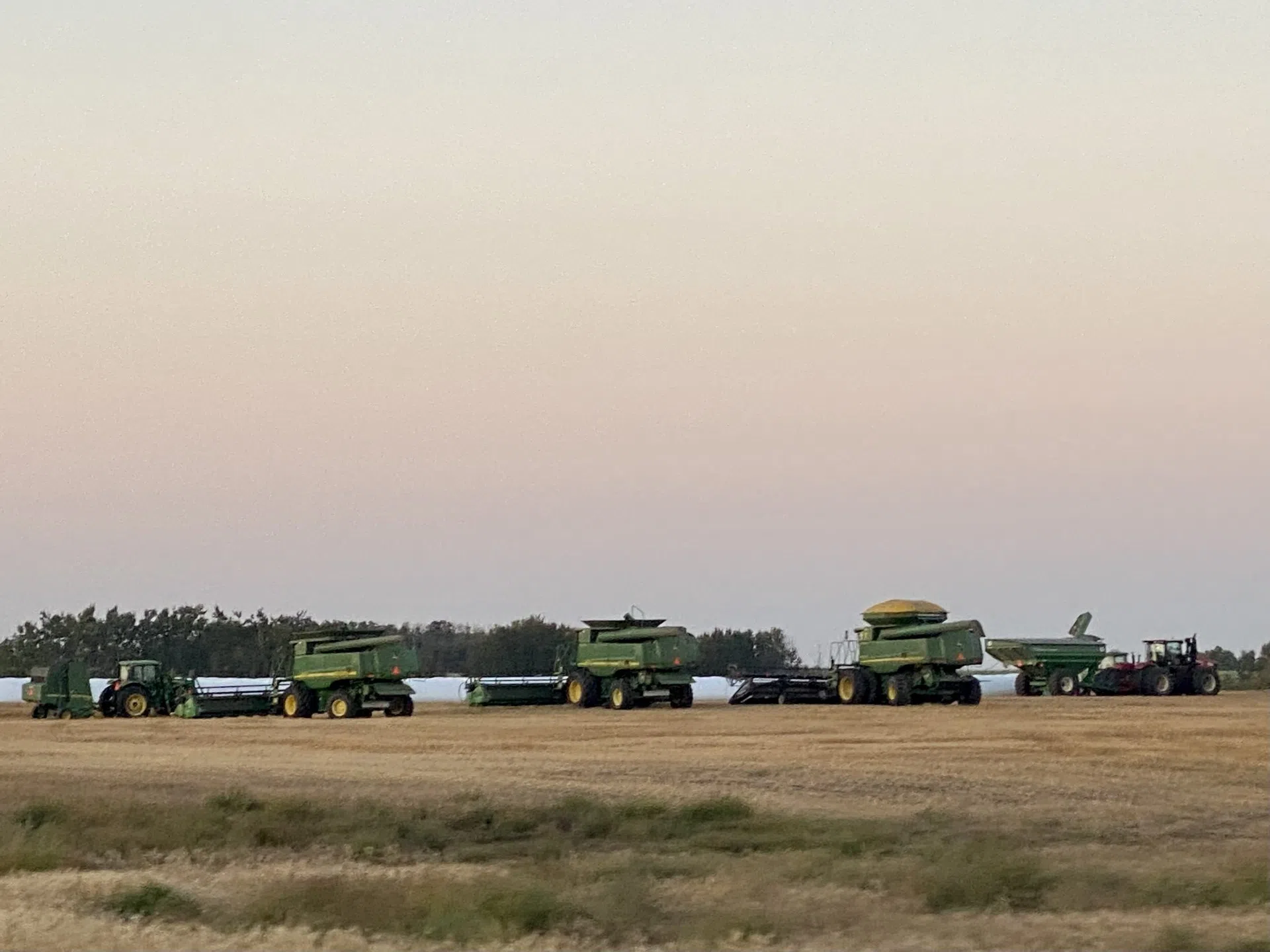
As combines begin rolling across the Prairies, Saskatchewan Agriculture Minister Daryl Harrison is reminding producers of the sector’s importance to the province’s economy and the need to put safety first during harvest.
“Harvest time is a reminder of the importance of the agriculture sector to Saskatchewan’s economy,” Harrison said. “The sector is responsible for 10 per cent of the provincial economy and 41 per cent of our total global exports. As harvest 2025 begins, I want to extend my appreciation to every producer, farm family and agricultural worker who contributes to the province’s economic growth and export strength.”
Harrison continues that producers should take precautions during the busy season, including getting enough rest, eating proper meals, carrying fire suppression equipment and watching for power lines when moving machinery.
Canola trade dispute adds financial pressure
The start of harvest comes as Saskatchewan farmers face fresh uncertainty in international markets. Earlier this month, China announced a preliminary anti-dumping duty of 75.8 per cent on Canadian canola imports, effective Aug. 14.
China is the world’s largest buyer of canola and sources nearly all of its supply from Canada. The new duty follows tariffs of 100 per cent imposed last year on Canadian canola meal and oil, effectively closing the Chinese market to all canola products.
“The Chinese market is effectively closed to the Canadian canola industry, and this is a market that was valued at just under $5 billion,” said Chris Davison, president of the Canola Council of Canada.
Canola is Saskatchewan’s top cash crop and a major driver of farm incomes. The province accounts for more than half of Canada’s canola production, and any restrictions on trade carry ripple effects through local communities, export terminals, and transportation corridors.
The new tariffs add to what mental health experts and researchers describe as chronic stress in farming communities. Producers already face volatile commodity prices, unpredictable weather and rising input costs. Trade disputes and foreign tariffs can increase those pressures.
The Canadian Mental Health Association warns that the financial impact of trade barriers can increase rates of anxiety, depression and substance use among farmers.
A University of Alberta study published in 2023 examined more than a dozen peer-reviewed papers on farmer mental health across Canada and internationally. Researcher Rebecca Purc-Stephenson said the evidence shows a heightened risk of suicide in farming communities.
“The stress that is involved with farming, it builds up so slowly to a point where it just completely overwhelms your capacity to cope,” said Purc-Stephenson, a psychology professor at the university’s Augustana Campus.
Alberta farmer Dwayne Kelndorfer, who shared his experience of a mental health crisis in 2018, said speaking up is key.
“It’s easy when you’re depressed to get holed up in your house and stay away from people. It doesn’t get better that way … But if we can talk about it, we can get help,” he said.
A joint report from the Canadian Centre on Policy Alternatives and the National Farmers Union, released in 2023, pointed to deeper problems in farm economics.
It highlighted that over the past 50 years, farm input costs such as fertilizer, fuel and machinery have risen nearly twice as fast as the prices farmers receive. As a result, profit margins have narrowed from about 35 per cent in the 1970s to less than seven per cent today.
That squeeze has forced many producers to buy more land in an effort to spread costs over more acres. But the strategy often results in heavier debt loads, longer working hours and greater stress.
The report called this cycle “capitalization”—a treadmill that pushes farmers to keep working harder without a clear path to relief.
Officials continue to stress the importance of safety during the harvest rush even as economic pressures remain.
September is recognized nationally as Suicide Prevention Month, with organizations urging producers to reach out if they are struggling.
Resources include:
Farm Stress Line: 1-800-667-4442, available 24/7, confidential and free.
National Farmer Mental Health Alliance: resources at nfmha.ca.
National Farmer Wellness Network Crisis Line: 1-866-327-6701, providing confidential crisis support.
Advocates say acknowledging the mental health challenges of farming is an important step toward reducing stigma and helping producers access support.
As Harrison noted in his message to producers, farming is not just an economic driver—it is also the foundation of communities across the province.
“The sector feeds the world, but it also supports our families, our communities and our way of life in Saskatchewan,” he said.



Comments