


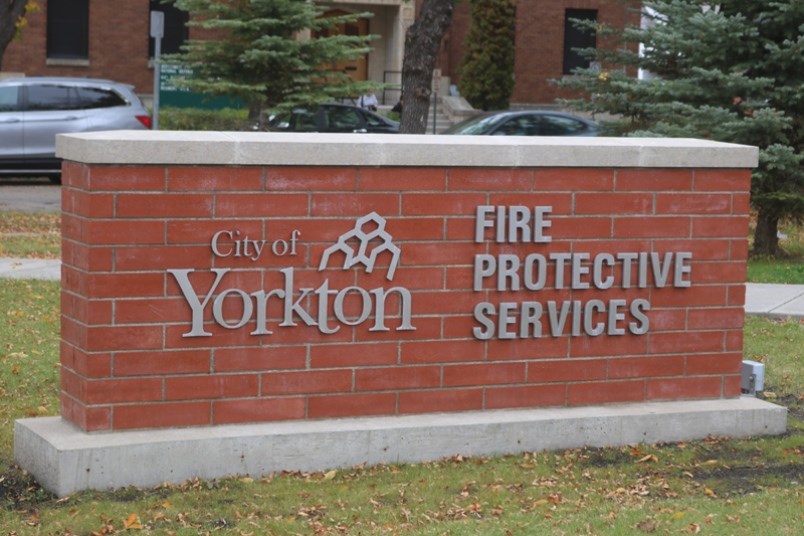
YORKTON – It took considerable debate and one motion being defeated but the City of Yorkton will move forward with bylaw changes to ensure a level of cost recovery in its fire services.
At its regular meeting Monday Council voted five-to-two, (Councillors Greg Litvanyi and Quinn Haider voted no) to direct Administration to prepare a bylaw to amend the current Fire Bylaw Emergency Response fee structure to put a maximum charge on firefighting cost recovery as follows:
* $5,000 for Residential
* $50,000 for Commercial
* No limit for Industrial or Agricultural.
Trevor Morrissey, Fire Chief, with the city had earlier suggested the decision would be a good one.
“Implementing these changes in the bylaw allows the City to reduce their financial exposure by utilizing a spread of risk business strategy, while realizing an additional revenue stream when services are provided,” he stated.
The issue of fire fighting charges has been bouncing around Council for a year before Monday’s nights decision.
Morrissey told Council Monday that dating back to September 2024, a Bylaw was unanimously passed to amend the Fire Bylaw to enable the City of Yorkton to charge firefighting fees for services provided.
In May 2025 an amendment to the Bylaw was presented to clarify that the firefighting fees would not be applicable to basic firefighting services and it would only be applied to additional resources such as additional units and additional firefighters. It was also proposed to place a maximum charge to residential properties at $5,000, detailed Morrissey.
“This amendment was defeated on third reading with a tied vote 3-3,” he added.
In a Committee of the Whole Meeting in August 2025 and Council Meeting in September 2025 Council raised concerns and recommended that Administration prepare another report.
Morrissey said the local effort to recoup costs is not unique.
“As municipalities across Canada face rising operational costs and increased demands on emergency services, the City of Yorkton has the opportunity to adopt a proactive, fair, and fiscally responsible approach to firefighting service funding. By implementing a cost recovery model for additional expenses incurred during firefighting operations, rather than being absorbed solely by the tax base,” he said.
Morrissey conceded some were concerned fees which might lead to increased insurance costs, but he suggested that seemed unlikely.
“One of the most common concerns regarding fire service charges is the potential for increased insurance premiums. However, this concern is largely unfounded in Yorkton’s context. Most property insurance policies already include provisions for fire department service charges. These are standard across many providers and jurisdictions, meaning that policyholders are already paying for this coverage as part of their existing premiums,” he said.
“Importantly, residents do not have the ability to remove this coverage from their policies, even if they wanted to. This means they are already paying for a service they are not currently receiving the full benefit of. By implementing cost recovery, Yorkton is simply enabling residents to access a benefit already built into their insurance. It does not add new costs to the homeowner nor business, nor does it increase the risk of premium hikes specifically tied to this charge.”
The fear of premiums escalating also seemed unfounded, said Morrissey.
“Another key point of clarification is that property insurance premiums are not necessarily set at the municipal level. Insurance companies operate on a regional, provincial, or national basis when calculating risk and setting premiums. As such, a cost recovery policy in Yorkton does not singularly affect local premiums. Instead, the risk and cost is shared across a much broader pool of policyholders,” he explained.
“This means Yorkton residents are already part of a much larger system where similar charges are applied in other municipalities. Yorkton adopting this approach is consistent with regional trends and does not make the city stand out in a way that would negatively impact residents' premiums.”
But fees would mean revenues for the city.
“Yorkton, like many municipalities, faces growing demands on emergency services, infrastructure, and public safety. Implementing cost recovery allows the City to generate revenue directly tied to service use without increasing taxes. These funds can be reinvested into improving fire department equipment, training, and response capabilities—ensuring continued high-quality service delivery across the city,” said Morrissey.
“Rather than placing the financial burden on all taxpayers, this user-pay model ensures that the cost of extraordinary firefighting services, particularly those involving industrial sites or large commercial operations, is more equitably distributed.”
Morrissey said large fires can force additional costs on the fighting of those fires such as overtime for internal crews or bringing in mutual aid from neighbouring departments.
“By billing these extraordinary costs to insurance providers through a cost recovery model, Yorkton can significantly reduce the financial risk of major incidents. This ensures that large, one-time emergencies do not negatively impact the City’s operating budget or lead to shortfalls that must be covered by local taxpayers. In this way, the financial burden is shifted from residents and ratepayers and onto insurers, where appropriate,” he said.
“Cost recovery helps mitigate the broader impact of fire-related emergencies by ensuring the operational costs of firefighting efforts are accounted for and reimbursed. This protects the City’s general operating budget from being strained by unexpected fire-related expenses and helps maintain funding for other essential services such as roads, parks, and recreation.
“Moreover, it reinforces the principle that those who cause or experience significant loss, and are already covered by insurance, should bear a fair share of the financial responsibility for the emergency response.”
In the end Morrissey said it was a fiscally responsible way to go.
“The implementation of a cost recovery model for fire fees in the City of Yorkton is a financially sound, equitable, and community-focused decision. It allows the City to access insurance funding that residents and businesses are already paying into, without placing additional strain on municipal finances or increasing premiums,” he offered.
“By shifting financial responsibility for exceptional fire response costs from local taxpayers to insurance providers, Yorkton ensures sustainable service delivery, improved public safety infrastructure, and continued fairness on how public resources are managed.”
Litvanyi was adamant the fees were not a good move.
“I’ve been against this from the start, and will be until the end,” he said.
Litvanyi would initially move that current fees be rescinded, removing all firefighting charges, but only Haider voted with him on the motion which was defeated.
Councillor Darcy Zaharia would then move the motion finally passing Monday.