

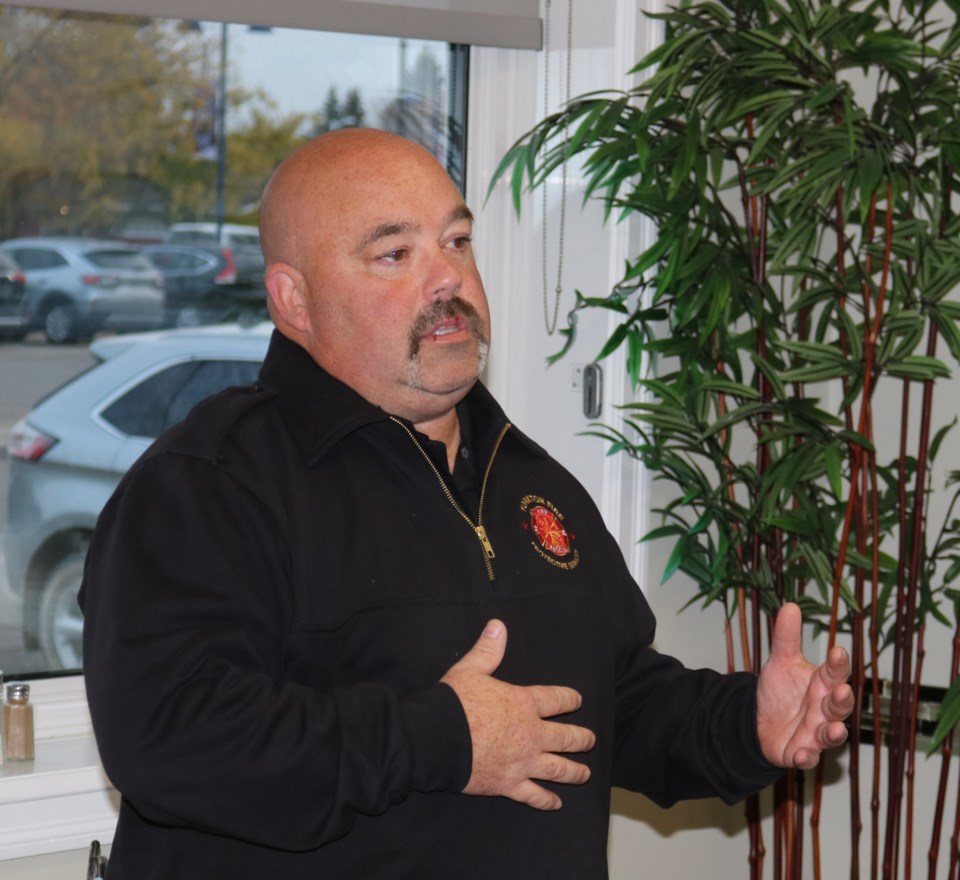
YORKTON – There are a growing number of homeless in Yorkton, and with winter looming efforts continue to establish the best way to help those on the street, offers Fire Chief Trevor Morrissey.
“Our numbers have increased,” he told Yorkton This Week, adding “our programs have increased as well.”
Morrissey said having a plan to help has actually been working in the sense “(numbers) have not grown as much as anticipated because of programs put in place.”
The results, while not massive, are showing the programs created are moving the needle in the right direction, said Morrissey, pointing to help with 10 homeless finding housing, and “getting three people into detox and treatment.”
“These were huge wins,” he added.
So why are numbers still climbing – Morrissey estimates 75-100 homeless?
Some are arriving in Yorkton from what Morrissey said was “outside our service area . . . because of overwhelmed services in smaller communities.”
Morrissey said certainly Yorkton does not have enough support for all homeless, but it has more than many communities and that will draw some hoping for help.
“They (smaller communities) have less resources than we do, and we don’t have many,” he said.
The local city and area situation is becoming worse too as costs rise and push some into dire situations, said Morrissey. Initially people might ‘couch surf’ spending time with family and friends, but that support might be lost and the life on the street is the only option some have.
The issue of homeless is made more difficult because needs vary greatly with the individual.
Morrissey said the common threat is a need for housing, but it must be affordable, and therein lies a real barrier as most rental units in the city have higher monthly fees than homeless can afford even with assistance.
It’s a case where the issue isn’t just on the street either.
“It extends into the home . . . It’s happening behind closed doors,” said Morrissey.
It can be family violence that sends someone to the street. It might be someone overstaying their welcome on the couch. It all contributes to the street situation, he explained.
And, then there is the issue of addictions.
“If it’s an addiction issue the road to detox and treatment is extremely complicated,” said Morrissey.
For example to get into a basic detox program the person “must be clean for 10-days,” he explained, adding on the street staying away from drugs is very difficult.
And even then most things are a barrier to finding help, for example people living on the street may have no identification that they need for program applications, or no phone for appointment calls, or no vehicle to get where they need to be.
The situation has led to the creation locally of a ‘Barriers to Access Committee’.
The committee focuses on what the basic immediate needs are, (food, housing, detox etc) and what barriers to that support might exist, said Morrissey.
It comes back to dealing with each case on its merits, starting with immediate help and a vision of where the person wants to end up.
“We make a plan to get them to that end,” said Morrissey.
Morrissey said they also realize those on the streets have immediate needs like food and shelter to focus on, so they may not have the energy to deal with going all over the city for the help they seek. So locally service providers – the fire hall, SIGN and others – are focusing on the idea help exists behind whatever door a homeless person walks into. Someone will make the calls and find where the service provider needed is to help that person on the spot.
“Our mantra is ‘no wrong door. Walk into any service provider and we’ll make a connection to the service you need right then and there,” he said.
Morrissey said he understands public concerns with someone setting up a tent, or cardboard shanty in the city, but simply forcing them to move is not a solution.
So when they do go to have someone move Morrissey said, “we want to give them at least two options.”
As an example four homeless were asked to move; one left on his own accord, one had thought he wasn’t allowed at Bruno’s Place but he was, another is being assisted by family, and the last is being helped to find housing, said Morrissey.
With cold weather ahead the issue shifts a little to simply ensuring safety for those on the street.
That starts with providing spaces “to stay warm,” said Morrissey, adding they are working with businesses and churches and other groups to establish just where homeless can safely go to warm up.
“We want to have mechanisms in place,” he said, adding in extreme weather safety is paramount or it is not impossible to envision someone dying in the cold.