


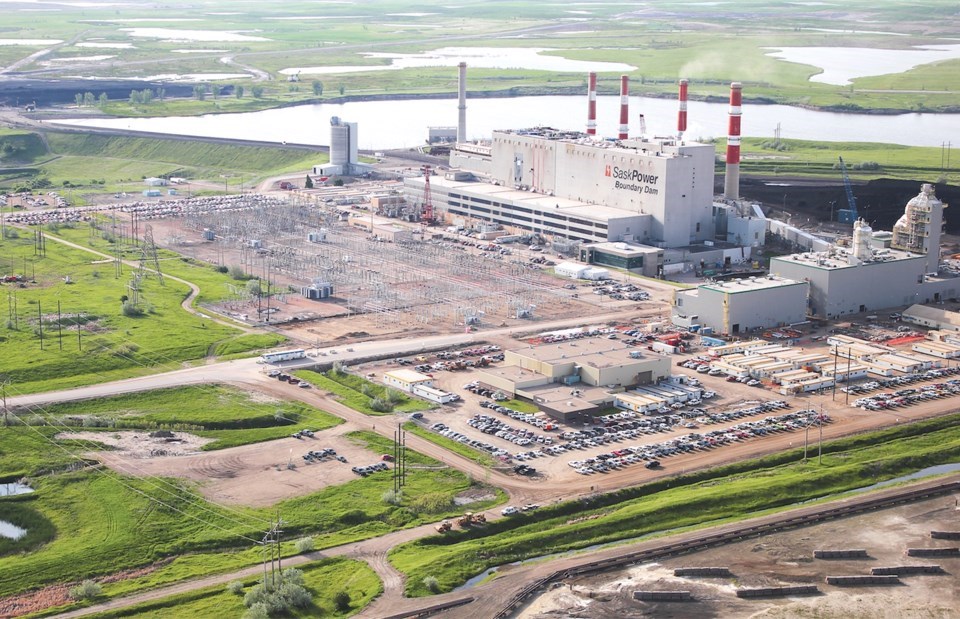
SASKATOON — A court has handed down its decision regarding an appeal on the future of coal-fired power in Saskatchewan.
The Court of King’s Bench has ruled against the Saskatchewan Environmental Society, Citizens for Public Justice and three people who oppose extending the life of coal-fired generating stations in Saskatchewan.
In a news release issued Jan. 13, the Government of Saskatchewan said it is pleased to see the court struck down the application.
"The court determined that the issue is essentially one of government policy and, as such, is not for the courts to decide," the news release stated.
"Our government is proud of the Saskatchewan First Energy Security Strategy and Supply Plan we introduced in the fall. The strategy lays out our plan to transition to nuclear power generation fuelled with Saskatchewan uranium, by life extending our existing coal fired thermal power plants fuelled with Saskatchewan coal. This decision was taken to ensure a reliable and affordable energy future for Saskatchewan residents."
In a news release, the SES said it is disappointed by the Jan. 12 ruling, which the SES said was on procedural grounds related to the court’s role.
“The court did not assess evidence or decide whether extending coal-fired power generation is lawful, justified or in the public interest, but instead ruled that such questions are not for the courts to determine,” the SES said in a news release.
This ruling does not change the scientific facts about coal pollution or the urgent need to reduce greenhouse gas emissions across Canada, the SES release said.
“The environmental and health risks posed by extending coal use for many more years remain just as serious as ever,” said SES president Margret Asmuss. “Saskatchewan residents deserve responsible, evidence-based energy planning that protects people, communities, the economy, and the environment.”
She said coal use is declining throughout the developed world, and claimed every other province in Canada has already phased out its coal-fired power stations or is committed to doing so by 2030.
Asmuss added coal is the most polluting way to generate electricity and extending its use contradicts clear scientific evidence, the direction of modern electricity systems and national commitments. Saskatchewan’s decision to extend coal also increases the province’s exposure to climate-related disruptions that are becoming more frequent and more severe.
“The Prairies are warming at roughly twice the global rate and Saskatchewan is already feeling the strain of climate change, including extreme heat, dangerous wildfire smoke and other damages, drought, floods, and stressed water supplies,” said Elaine Wheaton, SES board member and climate scientist. “Keeping coal plants running well beyond 2030 would only worsen these risks.”
Extending coal is also expensive and short-sighted, the news release said. Investing in outdated infrastructure will raise costs for Saskatchewan families while delaying the transition to more affordable and reliable technologies.
“Extending old coal plants isn’t a plan for the future – it’s a costly detour,” added SES vice-president Bob Halliday. “While other provinces attract investment in wind, solar, energy efficiency and storage, and grid innovation, Saskatchewan delays these opportunities by doubling down on coal. This means missing out on new jobs, technology development, and long-term economic resilience.”
“Canada’s climate commitments under the Paris Agreement depend on co-operation across all provinces, and Saskatchewan’s plans to extend coal-fired power generation weaken that shared responsibility,” said SES board member Peter Prebble. “Despite producing only four per cent of Canada’s electricity, Saskatchewan accounts for 24 per cent of all greenhouse gas pollution caused by power generation in Canada. The Supreme Court of Canada has affirmed climate change is real and poses a grave threat to humanity’s future. That reality means the Saskatchewan government has a responsibility to rapidly phase out conventional coal-fired power stations, and by doing so help reduce the transboundary greenhouse gas pollution that is causing climate breakdown in many parts of the world.”
The Saskatchewan Environmental Society says it will continue to advocate for evidence-based decisions in Saskatchewan’s electricity sector.
SaskToday will continue to monitor this story.