

There was significant spraying of canola for bertha armyworm in central and northern regions of Saskatchewan last year and there may be issues again in 2026, says Dr. James Tansey, provincial insect specialist with the Saskatchewan Ministry of Agriculture.
Tansey spoke Tuesday during a webinar sponsored by the Ministry of Ag.
The Ministry captured male moths in traps at 290 site locations during mid and late July, Some of the hot spots were places like Herschel, Landis and Sonningdale west of Saskatoon, as well as Nokomis and Jansen south and east of Saskatoon. Moderate bertha army worm moths numbers were found east of Prince Albert and in the Tisdale area.
Tansey says bertha army worm outbreaks are not usually one year events. However, he adds there is a naturally occurring virus which kills bertha armyworm called nuclear polyhedrosis virus (NPV). NPV causes the infected larvae to liquefy and any contact with it can make it burst.
"We did see occurrence of this virus. Was it numerous enough to limit populations in the coming year? I don't know. But we will continue to monitor. Hope for the best, plan for the worst." he said.
Moving on to insects in pulse crops, Cabbage seed pod weevil moved north in 2025 with significant numbers of weevils per sweep.
Cold winter temperatures could help keep the pest in check, according to Tansey.
"It all depends on the winter conditions," he said. "They're going to hunker down in areas that collect snow, so I think if you're in a region with reported populations from this past year, you should be vigilant this coming year."
When it comes to the pea weevil, Tansey said it's "even more sensitive than cabbage seed pod weevils…so if they don't have snow cover, there's a very good chance that they could be exposed to very damaging temperatures and the population could be reduced."
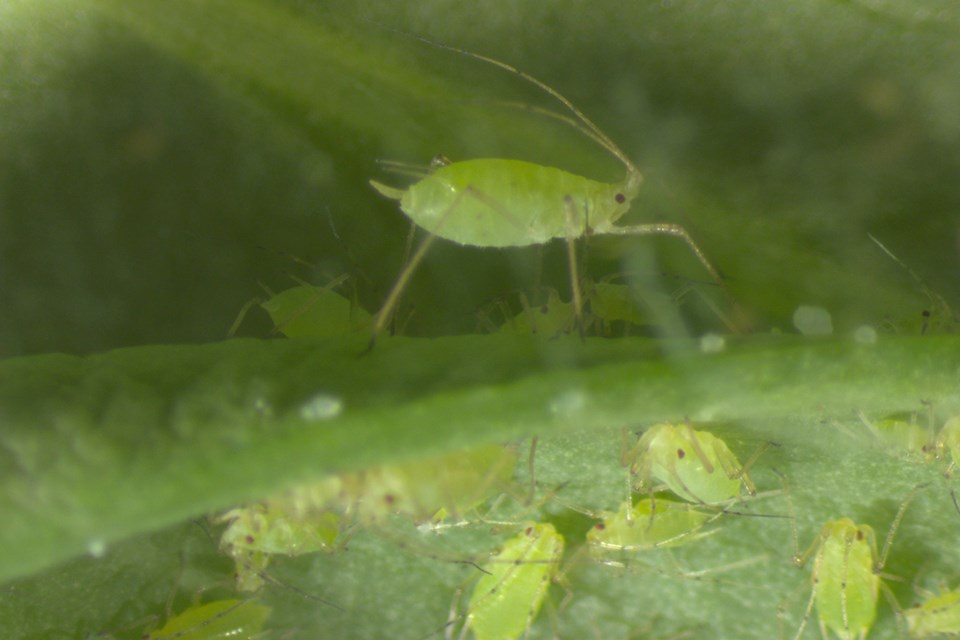
As for pea aphids, some are developing resistance to control products.
"We've had multiple reports in the last couple of years of difficulties with group 3 insecticides. Primarily those containing lambda-cyhalothrin. So those are products like silencer matador, which are real go-tos for pea aphid control in a number of pulse crops. So a number of reports in lentil of, unfortunately, these products not working as well as they could and in some cases, really not seeing an effect at all."
Tansey said unusual weather in the United States can also impact migratory insects, such as cabbage seed pod weevil, pea aphids, and diamondback moths, coming to Canada during the growing season.
"There's potential for those source populations to have come from the Pacific Northwest in the United States. They do grow canola there. It's not a massive industry, but they are really heavily affected by cabbage seed pod weevil. So yes, the weather in other parts of North America could certainly have an impact on problems for us in the coming season."
(With files from Neil Billinger, CJWW)