

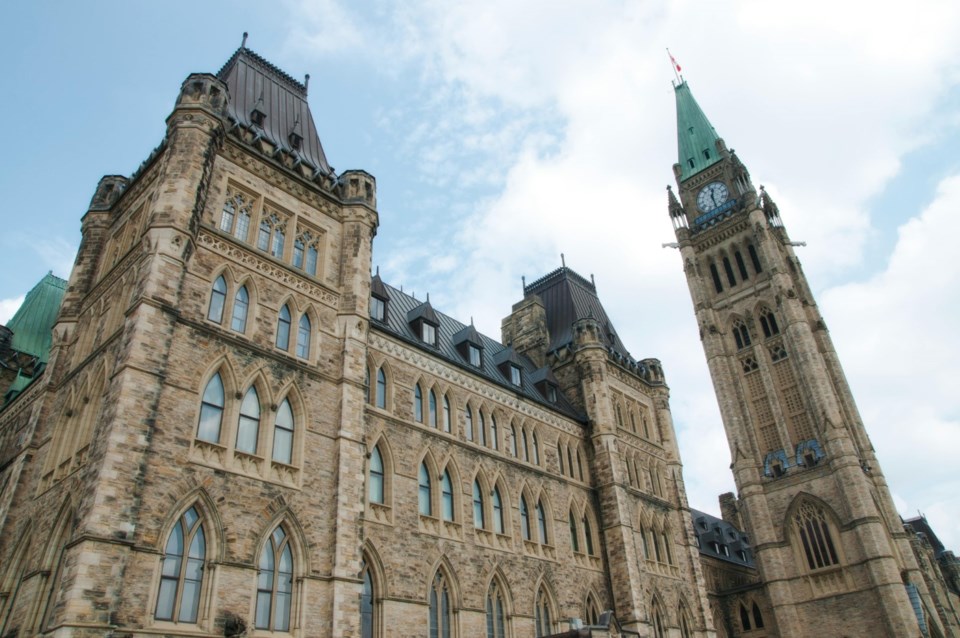
OTTAWA — The federal government has announced its long-awaited legislation aimed at clamping down on social media aimed at kids.
At a news conference in Ottawa the government announced it is bringing in the Safe Social Media Act (Bill C-34). According to their news release, the legislation would make online services responsible for addressing harmful content and creating a safer online space for all Canadians, especially children.
Marc Miller, Minister of Canadian Identity and Culture and Minister responsible for Official Languages, announced details of the legislation, which includes among its provisions a ban on social media use for those under 16 — although it stops short of being a full ban.
"The act will establish a minimum age of 16 to have a social media account," Miller told reporters.
"The act will require social media platforms and AI chatbot services to do more to protect children and make their platforms safe by design. Social media and AI chat platforms will have a responsibility to protect children from harmful content, including content that promotes self-harm, sexual exploitation, violence, hatred, bullying, or the non-consensual sharing of intimate images.
"Social media services will have to remove within 24 hours content that sexually victimizes a child or shares intimate content without consent, including sexually explicit deepfakes. And AI chatbot services will be required to mitigate the risk of chatbot communicating harmful content that have clear protocols in place when a user expresses an intention to harm themselves or others. They, too, will have to be safe by design. Platforms will have to be transparent and accountable to Canadians and submit publicly disclosed digital safety plans to the Digital Safety Commission."
Miller said the measures in this bill "represent, in my view, the basic expectation that parents and Canadians are keeping their kids safe online. I believe all parties should agree on the importance of these minimum safeguards."
The act would cover seven categories of harmful content: content that sexually victimizes a child or revictimizes a survivor; content that induces a child to harm themselves; content used to bully a child; content that incites violence; content that foments hatred; terrorism or violent extremism content; and intimate content communicated without consent.
There would also be a duty by regulated social media services to make two categories of harmful content inaccessible to users in Canada: content that sexually victimizes a child or revictimizes a survivor; and intimate content communicated without consent, including sexualized deepfakes.
The bill calls for creation of a new independent regulator called the Digital Safety Commission of Canada that would develop regulations and guidance, assess compliance, conduct audits and inspections, and enforce obligations under the Act through compliance orders and administrative monetary penalties.
The legislation will still need to be passed through the House of Commons. The government had tried to pass the Online Harms Act in the last House, but that bill died on the order paper.
As for this bill, the indication from Miller is the Safe Social Media Act is being introduced because while the government has tools to act when the harm is caused, they needed to do more to prevent harm from happening.
The issue of a social media ban had been something discussed at the provincial level including in Saskatchewan. Last month on May 5, Premier Scott Moe announced the government would be sending mailouts to households across the province seeking answers to two 'yes or no' questions: do you support social media limits for children under the age of 16, and if no, do you support parental consent for social media usage under age 16.
The survey also asked if any social media platforms should be exempt from the list, listing Instagram, YouTube, Facebook, Snapchat, TikTok or other as options. It also asked at what age social media limits should be imposed for youth.
At the time, Moe said the responses would "help us frame and inform our provincial position and our provincial discussions with the federal government as they are very open to considering the trajectory or the path that they are going to take nationally on this issue.”