


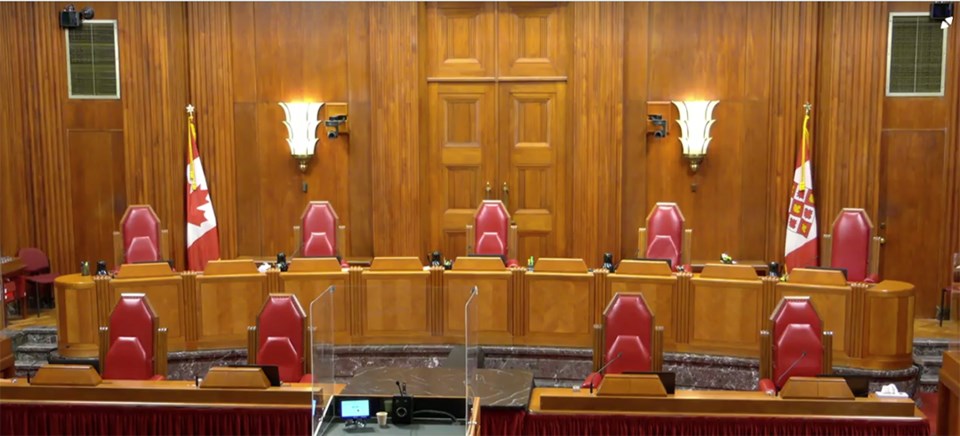
OTTAWA — The Canadian Bar Association (CBA) asked the Supreme Court of Canada (SCC) this week to rule that governments can’t use the notwithstanding clause pre-emptively to shield legislation from judicial review.
The case, Saskatchewan v UR Pride Centre, stems from Saskatchewan’s 2023 legislation requiring schools to obtain parental consent before addressing students younger than 16 with a new name or gender pronoun. The provincial government invoked the notwithstanding clause pre-emptively when it passed the law.
“If people cannot challenge the government in court, the government will be seen to be above the law in a manner irreconcilable with its own accountability, and the balance between the state’s power to make laws and the courts’ responsibility to address challenges to those laws will be skewed,” said the CBA in its submission to the SCC.
The CBA, one of 18 interveners in the case, argues that a court’s opinion serves a vital public function even when a government uses Section 33 to prevent a law from being struck down.
The CBA said that the Charter’s status as supreme law demands public understanding of its interpretation and application.
No hearing date has been set.