


BIGGAR — The government is in the hot seat again over the costs of transporting patients by ambulance for treatment in the province.
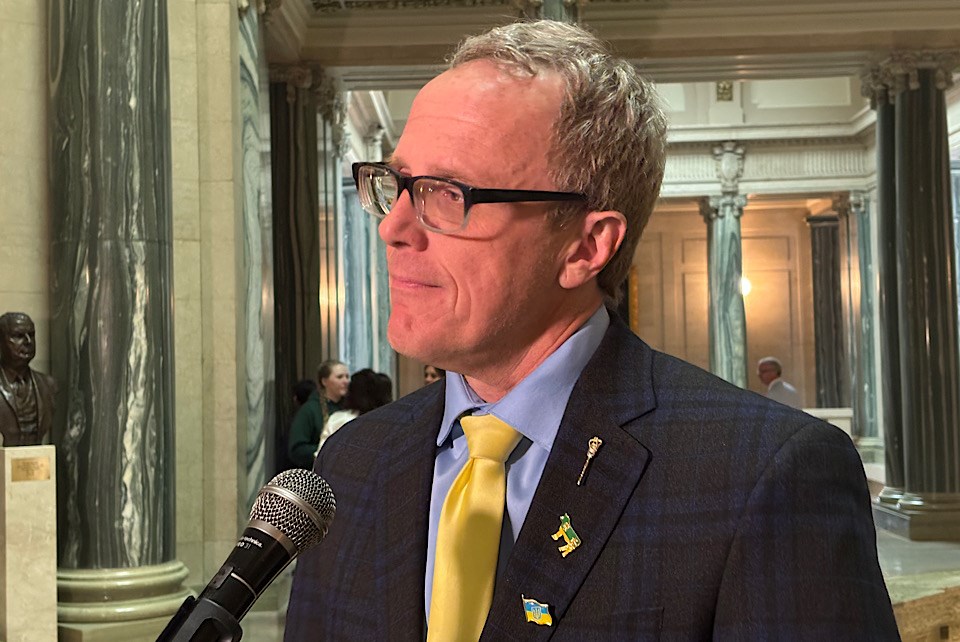
The NDP raised the issue in Biggar Wednesday when it called out a $1,300 bill that a family had to pay for an ambulance. At that news conference, the NDP’s Keith Jorgenson stood alongside Amy and Dylan Haynes, whose three-year-old son Nolan had to be transported all the way to Prince Albert for treatment in May.
Amy said their son Nolan, age three, had ended up with a fever, and they had initially sought care in Biggar.
“They tried to help him the best that they could, but they typically don’t deal with children out here, so they were very concerned that the fever was going to lead to seizures and everything else that they weren’t equipped to handle,” she said.
Amy confirmed, “The doctor here had tried to transfer our son to Saskatoon, to the Children’s Hospital, in the middle of the night, but there were no beds. Then she had tried North Battleford, but again, there were no beds there, and then Swift Current as well — same thing.”
Jorgenson confirmed that account, also noting that the hospital in Rosetown was unable to help.
Amy said that when they did get to Prince Albert, they “saw the pediatricians there, and they were fantastic. All the care that we received was amazing. It was just that receiving that care was a battle.”
The two parents had to take time off work to be with their son and arranged for grandparents to care for their other child. The biggest thing, she said, was that she wanted to “see things improve in our province because it shouldn’t be this hard to access care.”
As for her reaction to getting the bill in the mail in July, Amy said: “I expected it. I kind of was — I was very bitter knowing that I was going to get it, and when I got it, it was not surprising, which is unfortunate. But it’s not our responsibility that there were no beds closer.”
Jorgenson voiced outrage over the huge distance they had to travel and also that the transfer to Prince Albert resulted in such a huge bill.
“The end result was this family received a $1,300 ambulance bill — over $1,300. This is an extraordinary amount of money for them to pay out of pocket for essentially what I feel is the failure and incompetence of the Sask. Party government to provide people with health care where and when they need it.”
Jorgenson told reporters the government’s Patients First plan wasn’t working and said he would be mailing the ambulance bill for $1,349 “to Scott Moe’s and Jeremy Cockrill’s offices, demanding that they be reimbursed for the cost of this ambulance ride because their son was unable to receive the care that he required in his hometown or in any of the other hospitals that were closer than P.A.”
He said it was his hope that word about this ambulance bill “should shock people, and it should wake the government up into realizing that what they’re doing isn’t working and to change course.”
As for what solutions he wants to see, Jorgenson pointed to the need for a “nursing task force, listening to frontline health-care workers and settling contract disputes. We have some health-care workers who haven’t received a wage increase in four years, and so the government is surprised when they have people leaving health-care professions.” He also pointed to rural leaders wanting to have “a greater say in how health care is delivered in rural Saskatchewan.”
Jorgenson added that his office is aware of “many situations like this,” including cases where people are transported to one hospital and then sometimes to a second hospital.
In a statement Wednesday afternoon, the Ministry of Health said that while it is inappropriate to comment on specific cases, the “Ministry of Health remains committed to ensuring every Saskatchewan resident across the province has access to the right care, in the right place and as close to home as possible.”
“Ambulance services are not an insured benefit under the Canada Health Act, and there is no coverage for ambulance transportation between hospitals. However, in some instances, a portion of these costs may be considered for coverage by the Canada Revenue Agency when filing yearly income tax returns.”
The ministry added that it “understands the impact capacity pressures have on patients, staff and health-care providers, particularly in specialized areas such as pediatrics.” It also pointed to its continued work with the Saskatchewan Health Authority and other health partners to improve hospital capacity.
The ministry said that as part of its Patients First plan, the government is “currently working to expand inpatient capacity in Saskatoon hospitals by 146 beds, including the addition of six new beds at Jim Pattison Children’s Hospital, 24 beds at St. Paul’s Hospital, 36 beds at Royal University Hospital and 69 new acute care beds at Saskatoon City Hospital.”
The government added that patients with questions or concerns about access to health-care services or how decisions are made in the Saskatchewan health system are encouraged to contact a provincial quality of care co-ordinator for assistance in resolving their concerns.