

WAKAW — One hundred and fifty years ago, on Aug. 23, 1876, Chief Chippewayan signed Treaty 6 at Fort Carlton, alongside other First Nations chiefs.
When Chief Chippewayan passed away, his son, Young Chippewayan, became the hereditary chief, and the Department of Indian Affairs adopted his name as the band’s name; in 1879, land was surveyed and identified as their reserve land. By 1888, the Young Chippewayan Band was no longer recognized as a separate band, and then in 1897, through an Order in Council, the Government of Canada reappropriated the reserve lands and opened them up for settlement. Reserve No. 107 ceased to exist, and over time, Mennonite and Lutheran settlers arrived and homesteaded on the land.
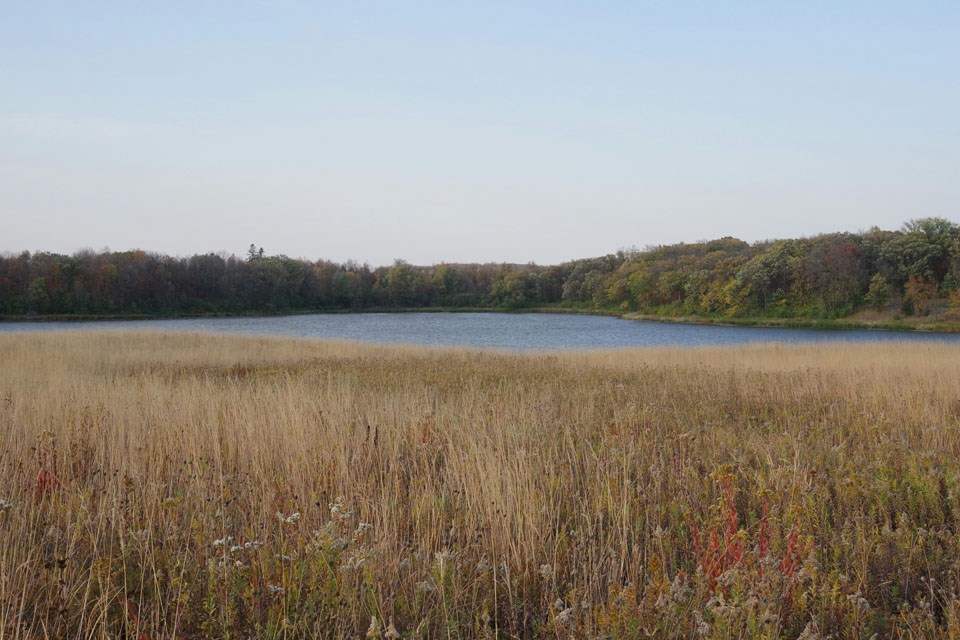
St. John’s Lutheran Church, which relocated to the town of Laird in the 1950s, was built on the hill known as Stoney Knoll, in the heart of Reserve 107. Today, the Young Chippewayan people are still waiting for formal band recognition and a settlement of their land claim.
Before the reappropriation, the government had begun withholding treaty annuity payments from Young Chippewayan band members due to a suspected involvement in the 1885 Northwest Resistance. When the band was unable to sustain itself on its Reserve and transition to farming, band members began to scatter, searching for food and ways to sustain themselves. Albert Snake’s recollections of the events surrounding the loss of the reserve were recorded in 1955 at a meeting convened at the Sandy Lake Reserve.
“… Food was also promised to my grandfather while his people were in a [sic] process of learning how to farm for their living. My grandfather waited for all this, and there was no sign of any coming when we left our reserve. …”
When the people left to look for food, the band was removed from government records.
Gary LaPlante, from Moosomin First Nation, is a descendant of the Young Chippewayan band, also known as the Stoney Knoll band, and in 1980, became involved in efforts to have the band recognized after hearing stories from his mother about its history.
“They were a community at one time, and a decade later they were dispersed,” said LaPlante.
In 1993, the Indian Claims Commission began an inquiry into the specific claim regarding the Stoney Knoll Indian Reserve and concluded that it was “clear that none of the people associated with Stoney Knoll Reserve, whether members, former members, or their descendants, were consulted with respect to the transfer of the reserve.” (p 26, Report on: Inquiry into the Claim of the Stoney Knoll Indian Reserve No. 107, Dec. 1994) In 2017, Canadian Senator Lilian Dyck from Saskatchewan invited members of the Stoney Knoll advocacy group to Parliament Hill to show the documentary, “Reserve 107”, and to share their story. However, it was not until 2022 that the Canadian government validated the Stoney Knoll land claim.
In 2024, the Canadian government offered to negotiate the claim, but LaPlante said progress stalled due to the federal government’s requirements that they must track the Young Chippewayan genealogy and identify the living descendants for whom the claim is being made. The band maintained genealogical records and hereditary leadership; however, because the band’s genealogy had not been professionally maintained, its membership list was considered invalid.
In the follow-up documentary to Reserve 107, Reserve 107: The Path Forward, LaPlante shared two questions the Ministry wanted the Stoney Knoll people to address before negotiations could begin: 1) How are the descendants of Stoney Knoll going to compensate the First Nations that had adopted and brought in their ancestors? Are those First Nations in agreement with releasing the Stoney Knoll people from their registers? 2) The Stoney Knoll people need to be sure about whether they want to be recognized as a First Nation by the Government of Canada, even though they do not know what all that will entail.
In a statement provided to CBC News, a spokesperson for Indigenous Services Canada said the department is in talks with Stoney Knoll First Nation to explore options to get band recognition and that it is a complex process that can take a number of years to complete. Saskatchewan’s Office of the Treaty Commissioner has stated that, while some progress has been made toward federal recognition and the Stoney Knoll land claim, more work remains.