


REGINA — Child care providers and the Opposition are still sounding the alarm over looming July 1 changes to funding for child care providers.
The province is embarking on changes to child care funding as a result of the new $10-a-day child care deal with the federal government that came into effect April 1. The NDP is claiming that as of July 1, child care centres in Saskatchewan would lose all funding for children who are enrolled as casual or part-time attendees, which they say will be a blow to providers looking to stay afloat.
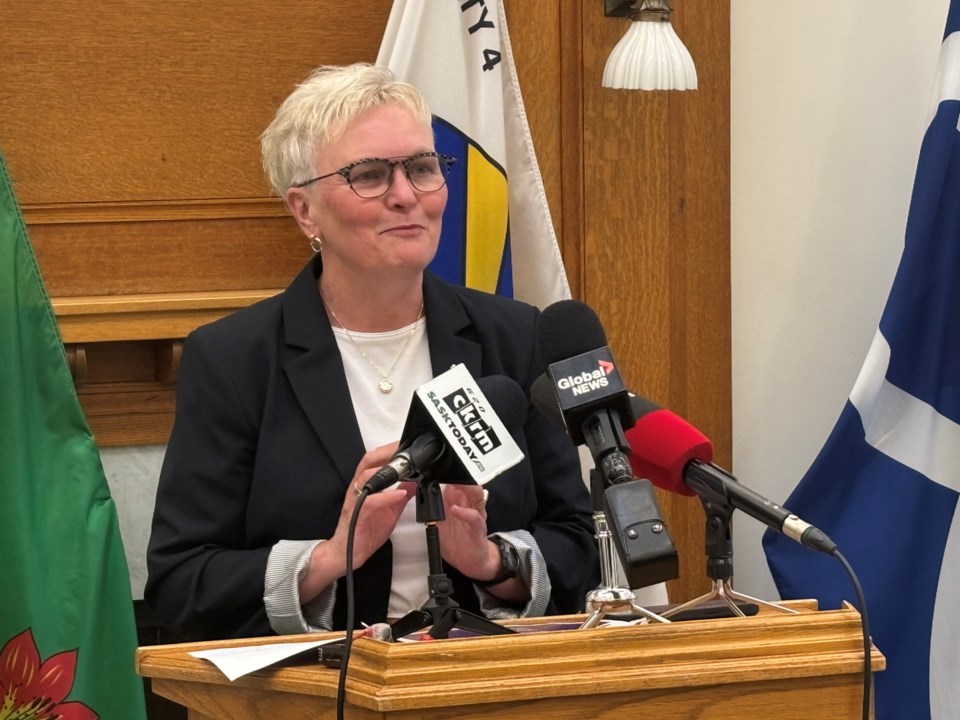
At a news conference at the legislature on Wednesday, child care and early learning critic Joan Pratchler called for an “immediate halt on those changes for July 1st and asking Minister (Everett) Hindley and (Premier) Scott Moe to stop these senseless July 1st cuts.”
Pratchler stood alongside Cara Werner, director of Dream Big Childcare Centre in Rocanville, and young parent Kaitlin Gibson. At that media event, Gibson, who has a 16-month-old son, told reporters she had to quit her job because she couldn’t find child care space.
“The current system is failing parents who are trying to do everything right,” Gibson said.
“This is not just a parent problem. This is an economic problem, a workforce problem, and a rural sustainability problem. I was forced to walk away from a job not because I lacked ambition or work ethic, but because childcare access made employment impossible.”
She added they have been informed that “additional fees will be added to our current childcare expenses.”
“As a family, we now need to carefully review and discuss whether these increased costs are manageable for us. If they are not, we may be forced to withdraw our child from casual care until a full-time space becomes available and I am able to secure employment again.”
Werner raised concerns about what the July 1 changes will mean for casual and part-time spaces.
“Providers will no longer receive grant funding for casual children over their licensed spaces, even though we provide care for children over our licensed spaces by stacking, something that the ministry had previously encouraged,” Werner said. “I can't tell you what a blow this is to families trying to find childcare in the childcare desert that we live in, and for providers struggling with an already inadequate funding model.”
She added that the ministry “claims to be taking this excess funding and using it to complete expansion on other spaces not yet operational. In other words, they're taking funding from children already accessing care to use on spaces that are not yet usable.”
Pratchler warned of fewer spaces, skyrocketing waitlists and people leaving the sector and the province.
“Continuing down this path is going to send Saskatchewan's child care into a complete tailspin,” said Pratchler.
“And are we going to see thousands of parents forced out of work? Oh, you bet. We have lost the access to consistent, affordable, accessible child care all over this province. But it doesn't have to be like this.”
Pratchler also warned of harsh political consequences for the Sask. Party government if the changes were not reversed.
“This will not end well. And boys, if you see yourself going over a cliff, stop, you have time before July 1st to stop this.”
Government pushes back on idea casual or part-time care will not be funded
SaskToday spoke to Assistant Deputy Minister Sameema Haque from the Ministry of Education about the concerns raised, and she pushed back against the idea that children enrolled as casual or part-time attendees will not be funded.
"That is not correct," said Haque.
"The government is not discontinuing casual and part-time — the operators can continue to serve casual and part-time children in their spaces. What we are saying is in order to have long-term sustainability, and extend the affordability to as many families as possible across Saskatchewan, what we are not going to be doing is giving duplicate grants for those same spaces."
She explained that when a child attends a child care space for 10 days or more in a month, the ministry will fully fund that space, so whatever the full-time fee is for that space is fully provided by the ministry.
"If a child is attending for 10-11 days and the operator decides to have another part-time child in that space, they can do that, they can collect a second period portion of the fees — that would give them an additional revenue for that space. They could have casual children attend that space for days that are vacant and collect the portion of the fees."
What the ministry won’t be doing, said Haque, is "giving multiple grants for the same space, so we can give grants to all the other spaces that we have now in operation and will be coming into operation over the next month."
"So at any given time there will not be two children present in that space because that would not be possible under the licence condition. So if it’s a 40-space childcare operator, they would have 40 children maximum at any given time. Their occupancy cost is for 40 spaces, their utilities costs are for 40 spaces, their nutrition costs are for 40 spaces. So at any given time there will be one child present. Sometimes children attend on a less-than-full-time basis. Sometimes they are attending for fewer days, sometimes a child may not come because the parents decide to take time off, and at those times the operators can have casual children come in and get the parent portion of it. But we would’ve still fully funded that space based on 10 days of attendance, so what we are giving is full-time fees for all those spaces up to the licence number. What we are not giving is duplicate grants for the same space because there are not two children being served at the same time."