


REGINA — Saskatchewan's Ministry of Environment is reporting a detection of invasive mussels in Lake of the Prairies, a shared waterbody between Saskatchewan and Manitoba.
Multiple invasive mussel veligers (the larval stage of the mussel life cycle) were detected in Lake of the Prairies, near Manitoba's Highway 5 bridge, as part of their routine surveillance monitoring program and corroborated by follow-up monitoring efforts between the two provinces.
The Ministry of Environment has launched its Aquatic Invasive Species (AIS) Response Management Plan, with response being co-ordinated through a joint Manitoba-Saskatchewan incident command structure for this shared waterbody. The Department of Fisheries and Oceans Canada (DFO) will also be acting in a supporting role. The provinces and DFO are working together to better understand the detection through a co-ordinated monitoring plan while developing and implementing a multi-jurisdictional containment plan, Sask. Environment reports.
In response to the detection, containment orders have been issued for Lake of the Prairies. These orders require all watercraft and equipment that come into contact with Lake of the Prairies to be decontaminated before use at any other waterbody. This order applies from the Highway 357 crossing of the Assiniboine River to the entirety of Lake of the Prairies.
Manitoba has also established a containment zone for their portion of Lake of the Prairies, which also carries a requirement for decontamination for any watercraft or equipment leaving Lake of the Prairies prior to use on any other waterbody.
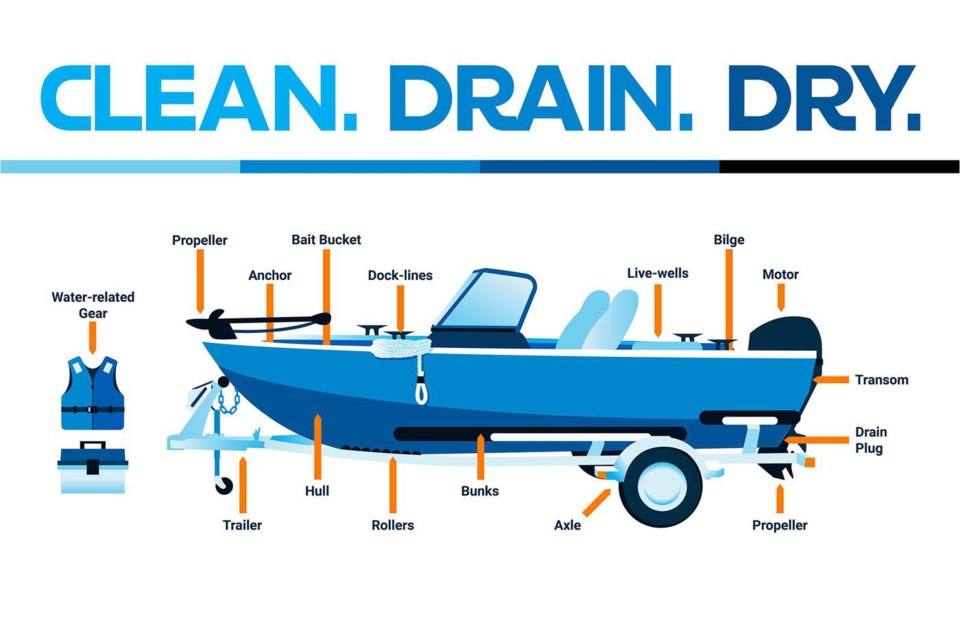
"The recent detection in Lake of the Prairies highlights the importance of ensuring all watercraft and water related equipment are cleaned, drained and dried after every use, no matter which waterbody you were last using," Environment Minister Darlene Rowden said.
"With the Lake of the Prairies containment orders in place, it is critical everyone who has had watercraft or equipment in contact with this area follow the decontamination procedures by our AIS response team before moving watercraft or equipment to another waterbody."
Invasive mussels pose a significant socioeconomic and environmental threat to Saskatchewan and beyond, a press release said, and effective containment of this threat is critical to reducing the risk of mussels from Lake of the Prairies being spread to other waterbodies by watercraft or equipment used at this location, Sask. Environment advises.
Decontamination will be completed by trained officers within the ministry's AIS program, who are already on location to support compliance with the order. If you plan to move watercraft or equipment that has been used within the containment order area and require decontamination, contact our inspection and decontamination program at aiswatercraftinspection@gov.sk.ca to schedule a decontamination.