

WAKAW — As autumn arrives, so does peak wildlife activity across Saskatchewan.
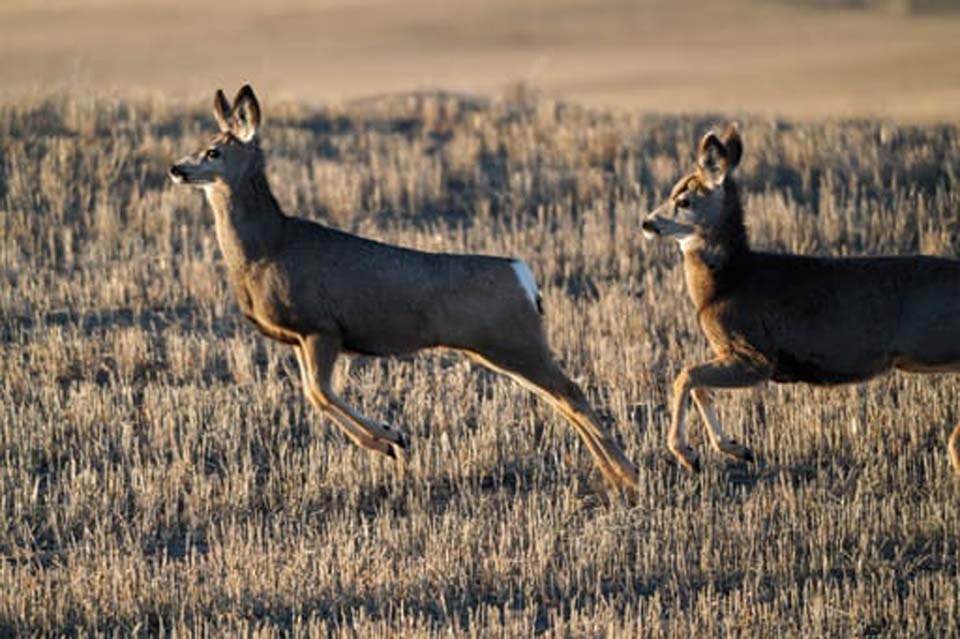
During this season, moose and deer are on the move, dramatically increasing their presence on provincial highways and rural roads. Deer are primarily crepuscular animals, meaning they are most active during dawn and dusk. During the rut (mating season), deer activity is significantly increased and less predictable. Deer tend to be more active during daylight hours in the fall, and bucks, especially, driven by hormones, will be active at all hours of the day and night as they search for does. Unfortunately, this rise in movement also means a higher risk of collisions between wildlife and vehicles.
According to the most recent data from SGI, there were 9,053 wildlife-related collisions in 2024, including 8,683 property damage-only incidents, 366 injury collision and four fatal collisions, resulting in 443 injuries and five fatalities. The majority of these collisions occurred on highways, followed by rural roads, urban streets and other road types. Saskatchewan’s largest urban centres, including Saskatoon, Prince Albert and Regina, topped the list for wildlife collision frequency.
“Collisions with large animals can cause serious damage, injury, or worse,” says Darrell Crabbe, executive director of the Saskatchewan Wildlife Federation (SWF). “By slowing down, staying alert, and watching for movement along the shoulders, especially during dawn and dusk, we can help protect both people and wildlife.”
The SWF, together with the SGI, remind motorists that autumn’s shorter daylight hours can reduce visibility when deer are most active. Drivers are encouraged to reduce their speed in high-risk areas, remain alert near wildlife crossing signs and scan both sides of the road for movement. Moose, due to their weight (similar to a small car) and their size, create a significantly greater danger. The majority of their body weight sits higher than the hood/impact zone of most vehicles, and hitting a moose straight on often results in the moose sliding across the hood and crushing the roof of the passenger compartment, which can be fatal.
Remember, if one animal crosses, others may follow.
While collisions can occur at any time, the risk of a wildlife-vehicle collision (WVC) increases significantly at night. More than one-third of WVCs in Canada occur in the Fall between September and November (TIRF Fatality Database, 2022). The headlights of vehicles can be disorienting for animals, making it more difficult for them to judge distances and speeds of moving vehicles, and the consequences can be severe for both humans and animals and result in injuries or fatalities for drivers, their passengers and wildlife.
The Traffic Injury Research Foundation (TIRF) reports that between 2000 and 2020, 569 persons died in wildlife-vehicle collisions (WVC) in Canada. (https://tirf.ca/blog/preventing-wildlife-collisions/) While WVCs can occur at any time, fall is the peak season for WVCs because of the mating season and male deer being more active and aggressive during this time. In addition to the early dusk and being mating season, fall is also when many animals are preparing for winter and/or migrating, which means they are more likely to be on the move and crossing roadways. Several strategies can help drivers avoid wildlife-vehicle collisions at night.
- Slow down and stay alert. This means obeying posted speed limits, avoiding distractions (such as using a cell phone or taking your eyes off the road to navigate complex touchscreens) and staying focused on the road ahead. Drivers should also be aware of their surroundings and watch for signs of wildlife activity, such as animal crossings or natural habitats.
- Use high beams when it is safe to do so. High beams can help drivers at night by increasing visibility of the road and giving them more time to spot animals and react accordingly.
- Be prepared to react. If you do see small wildlife on the road, it is important to know the safest strategy to prevent a collision to keep occupants and wildlife safe. The safest response to wildlife on the road is to slow down in a controlled manner and steer straight, even if the animal is in the path of the vehicle. Never swerve and hit your brakes, as this is more likely to result in a collision.
TIRF Tip: Most animals are not likely to remain still, and since their behaviour is unpredictable, drivers cannot anticipate which direction the animal will move.
The best course of action is to slow down in wildlife-inhabited areas, especially where signs are posted, be alert to the road environment, and mentally rehearse your reaction to different potential collision scenarios. There is no one single correct way in which to respond to different situations, but keep in mind that animals, unlike humans, may not recognize a honking horn as a warning, which could result in different responses depending on the situation. Animals may become confused or frightened and freeze, remaining where they are, may run towards a vehicle or into the path of other road users, or even turn around and cross back over the road.
Do not swerve. Do take your foot off the gas, immediately reduce speed by easing on the brake, and stay in control of your vehicle. For more information about wildlife and road safety, visit https://wildliferoadsharing.tirf.ca/road-safety-and-wildlife/road-safety/, sgi.sk.ca/wildlife-collisions or contact the SWF Central Office at 306-692-8812.
This year’s advice from the Saskatchewan Wildlife Federation urges drivers to Give Wildlife a Brake.