

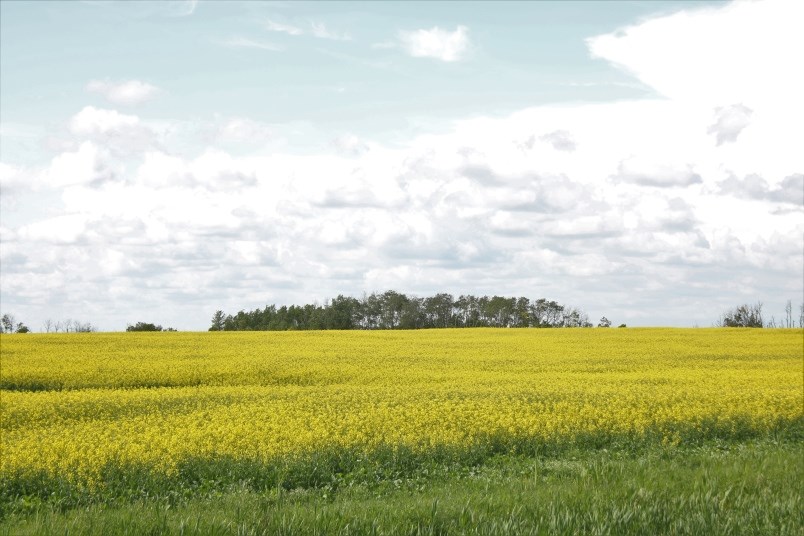
YORKTON – The rather old debate about who should own farmland in Saskatchewan has flared up again.
The renewed concern is about non-Canadian citizens and corporations owning land.
The debate really starts with the question of whether it matters?
Certainly we tend to look at land as a resource different from most, and it is in the sense no matter who owns it they are not going to pile it into a ship and take it away.
By contrast mineral and forest resources can be processed by a facility not owned by Canadians and hauled away – and that certainly happens.
But farmland is seen differently – and frankly farming that operates in many cases as multi-million dollar businesses but are not seen exactly as being ‘big business’.
There is often talk of the disconnect we have from farming and the land as farmer numbers decline and urbanites no longer have family ties back to the family farm – yet we do hang on to the idea of farmland ownership mattering.
However, it should maybe be looked at again as to whether it matters.
For example, many farmers rent acres. Does it matter particularly if that land is owned by a retired neighbour — maybe one now living in Vancouver – or, if the land is owned by someone in London, England?
Of course the key element of the debate is ownership, and allowing foreign ownership is likely to push up land prices which is a double-edged sword of a kind.
On the one hand higher land prices are good news for a farmer retiring. They have more to retire on.
It’s good news for the content farmer whose land base is set. Their asset values rise – at least on paper.
On the other hand the farmer looking to grow faces tougher decisions because land prices are higher.
Interestingly, as many producers make the decision to add acres they turn to various lending institutions to raise the funds. They then make payments for years before fully owning the land.
Those lending institutions are not likely headquartered in the province, and many will have interests well beyond Canadian borders – so why is farmland approached differently?
One suspects at its heart the desire to maintain local farmland ownership goes back to the idea of the family farm.
Certainly those farms still exist, but most won’t exactly fit the long-held vision we probably still have.
Farms are massive, with millions of dollars invested, and as a result they operate on a far more global scale than ever before.
Canada of all countries should well-understand the need to look globally in agriculture as we are very much an export-oriented nation. With that, is it the case of farmland really different in terms of a global approach to ownership—or is that just a long-held perception?
That one supposes is what the often renewed debate is all about.