


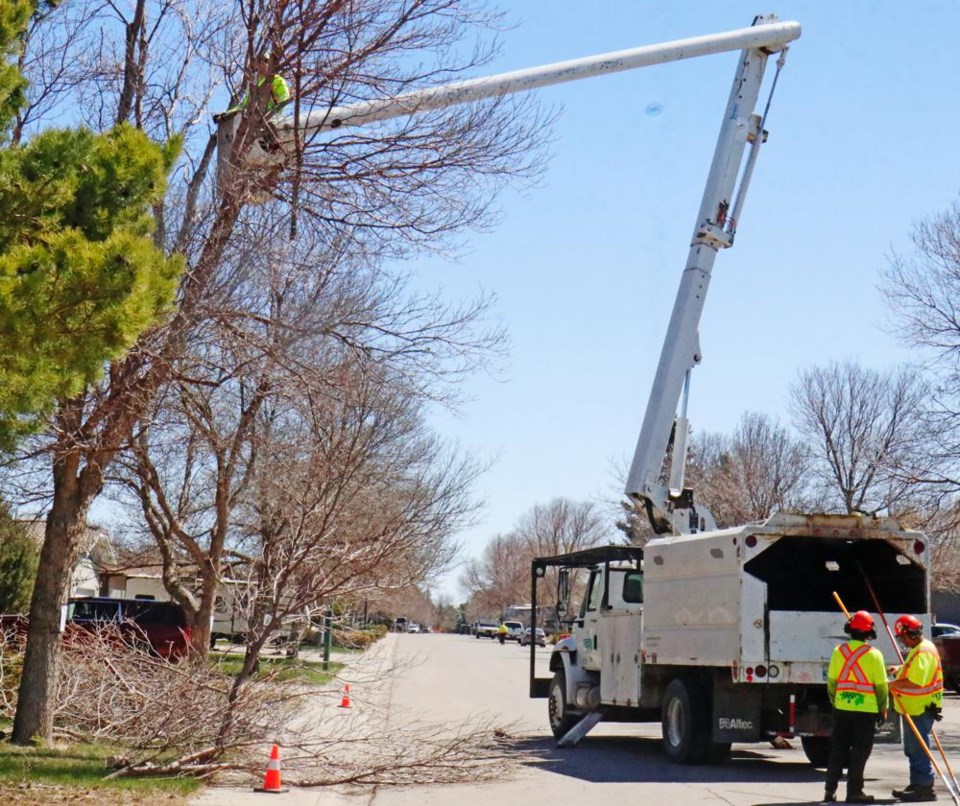
YORKTON – The wonders of nature never cease. Nor does our ability to learn new things. Our cousins were talking about a ‘self-pruning willow” which was new to us, so time for some homework!
More than willows self-prune. Self-pruning, also called cladoptosis, is a process where a tree can drop branches by its own determination, for example if certain branches are diseased, or too shaded, or infested with insects.
One of the main reasons a tree will do self-prune is because some branches may not be able to photosynthesize or be able to turn light into glucose to feed the tree. Nature knows that this is necessary for the tree’s survival, and if it can’t be done, nature takes step to remedy the situation.
There are a number of trees that ‘self-prune’, such as aspen, birch, poplars, maples, and willows. While the process is natural, gardeners may not always want twigs and branches to be falling in their yards. So, what can we do?
If we are creating or re-creating a landscape in our yards, we might want to read more on the subject and choose trees that are not likely candidates to self-prune. But in existing gardens, maintaining good tree health should be our goal. We should make sure the tree has enough water, check it regularly for any sign of problems, and nip them in the bud, pardon the pun!
We should also trim our trees to remove branches that are crowding out other branches, or too heavy on one side, or showing other problems. Proper pruning (in terms of technique and timing) in a healthy tree will encourage good growth in the future.
Now, something completely new to me. Maybe you have heard of it. My homework began with our latest issue of “The English Garden”, a beautiful magazine from the UK with lots of good gardening information and amazing photos. Keith asked me if I read the article on medlars. Medlars? What’s that?
Okay, here we go! Medlars can be compared most closely to an apple, sort of. The fruit tastes like apple and perhaps a pear, and some say like a fig. In other words, a unique but delicious taste. It sounds like the medlar tree is pretty in all seasons, with nice blossoms in the spring and good colour in the fall. But the interesting and unique thing about this tree is that the fruit has to stay on the tree until it seems as if it is almost rotting before it is usable.
For gardeners who like a challenge, there are medlars that will tolerate our zone. If you’re interested, check online for sources. The trees like full sun (but can stand a bit of shade) and well drained soil. They are self-fertile, and that means we don’t need two to get fruit. Medlars look like small, slightly strange apples; we would leave them on the tree till they have really ripened (we might think they are over-ripe) and softened, which is called “bletting”. Or they can be picked and bletted in the house, and once they reach that very soft stage, they can be used for jam or chutney.
There are varieties that don’t grow too big, so if gardeners are looking for a unique specimen in the yard, a plant that will get lots of curious garden conversation, medlars may be the one!
Even if we don’t try it, it is good to learn about something new in the garden. We never stop learning! The Yorkton Hort Society will meet again in March 2026. Visit us at www.yorktonhort.ca Thank you to our friends at YTW for their fine work. Have a good week!