


REGINA — SaskPower says the process of extending the life of its coal-fired generating stations will be lengthy and costly, but still less than building new plants to meet incoming federal regulations.
In a submission to the Saskatchewan Rate Review Panel, the Crown corporation said it is embarking on a life extension of the coal-fired generation facilities for 25 years.
According to SaskPower, the assessment is complete for Estevan's Boundary Dam Power Station Unit 6 (BD6) and Unit 0. An assessment for Coronach's Poplar River Power Station Units 2 (PR2) and 0 at Poplar River Power Station near Coronach is 60 per cent finished and scheduled to wrap up in April, while the assessment for Unit 1 at Poplar River is at 15 per cent and slated to be done in September.
As for the other units, SaskPower says the assessment for Shand is at five per cent complete and is to wrap up in December, while units 3-5 at Boundary Dam have not started and are to wrap up in April 2027. Order-of-magnitude estimates were developed in January 2025, drawing on data from BD3 and PR1 life extensions, completed in 2014 and 2008, respectively.
BD0 and PR0 refer to the common systems for the power stations. These are the parts of the facility that support the operation of all the units.
SaskPower reports the BD6 life extension and unit rebuild are scheduled for 2028-30, followed by PR2 (2031), Shand (2032), PR1 (2033), BD3 (2034), BD5 (Phase 1 in late 2027 and early 2028, and Phase 2 in 2035) and BD4 (2035).
“Some life extension work is being advanced and/or staged outside of these dates to ensure unit reliability, optimize construction, and manage execution risks," SaskPower said.
Since BD3 was redesigned in 2013-14, SaskPower said there will be less work required than the other units, but there will still likely be partial replacement of some of the equipment.
SaskPower noted that based on the direction to extend the life of coal rather than follow the Clean Electricity Regulations, the Crown corporation has reduced projected capital expenditures by more than $21 billion to 2050.
“This was achieved by avoiding the construction of new natural gas generation power plants equipped with carbon capture, and avoiding the construction of new transmission and distribution infrastructure associated with additional renewable generation," SaskPower wrote.
“External consultants have estimated the cost of refurbishing SaskPower’s 1,500 megawatts of existing coal facilities at $2.6 billion, while the cost of a new 370-megawatt combined cycle gas-generating plant is currently $1.7 billion."
The projected cost for each plant is BD3 ($228 million), BD4 ($501 million), BD5 ($189 million), BD6 ($327 million), Shand ($346 million), PR1 ($356 million) and PR2 ($336 million).
Also, there is a $254 million price tag for the CCS facility, $56 million for BD0 and $38 million for PR0.
“The decision to extend the life of existing coal-fired generation assets was not driven by a determination that coal life extension represents the lowest-cost generation option. Rather, the decision reflects a strategic policy choice grounded in the principles of energy security, system reliability, affordability and the need to ensure sufficient electricity supply to support economic growth in Saskatchewan,” SaskPower said.
“The provincial Energy Security Strategy sought to strengthen and expand the reliability and capacity of Saskatchewan’s electricity system through a diversified, all-of-the-above approach to generation investment.”
Saskatchewan’s electricity system faces unique structural and transitional challenges, including limited legacy hydro resources, increasing demand associated with economic development, and the requirement to maintain reliability while transitioning to a lower-emissions grid, the Crown corporation said.
“In this context, coal life extension provides dependable baseload capacity that supports system adequacy, operational flexibility, and diversity of supply, while reducing exposure to fuel, technology and supply-chain risks during a period of significant change.”
Coal life extension also plays a defined role as a bridge to nuclear generation, which SaskPower says forms the foundation of the corporation’s long-term strategy.
Supply and delivery of coal contracts expire at the end of 2029, SaskPower said. Negotiations have already started to amend the current contracts and to execute new contracts for the supply and delivery of coal starting in 2030. SaskPower estimates the new contracts and amendments to the existing contracts will be complete in 2028.
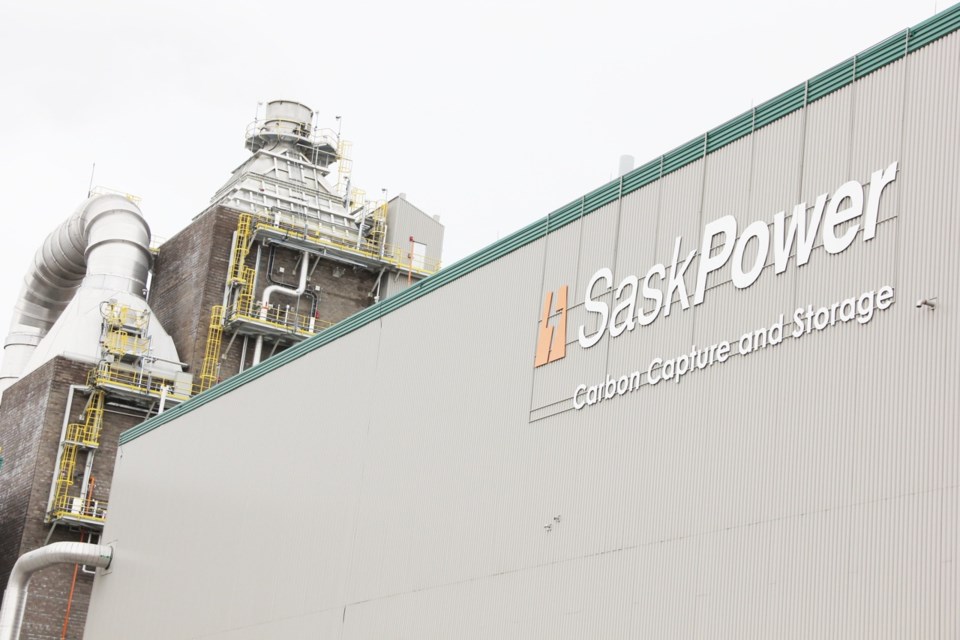
As for the future of carbon capture and storage, BD3 will be re-powered to life extend the operation of the power generating unit. This will involve like-for-like replacement of assets to extend operations to 2050.
“At this time, it is anticipated the carbon capture and storage facilities will continue to operate after BD3 is re-powered. Currently, SaskPower has no plans for the addition of carbon capture and storage facilities to any other power generating unit.”