


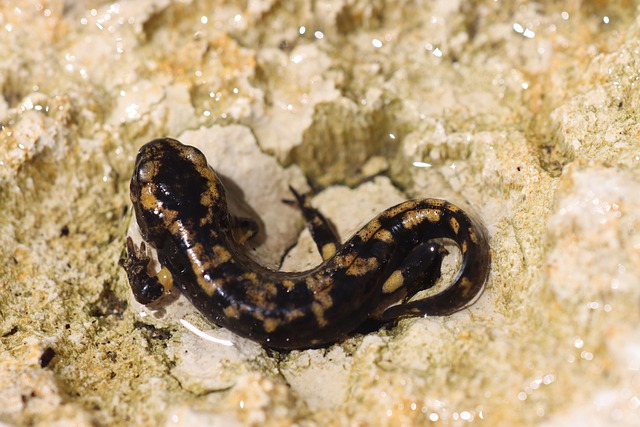
This probably isn't a tiger salamander.
Salamanders in Saskatchewan are a fascinating and vital part of the province’s natural landscape. The most commonly found species is the tiger salamander, recognizable by its striking coloration and robust size. These amphibians are adapted to the region’s climate and are most often spotted in moist habitats such as wetlands, ponds, marshes, and occasionally damp woodlands, where they seek shelter and breeding grounds.
Throughout the warmer months, salamanders emerge from their underground burrows to feed and reproduce. They are nocturnal hunters, preying on insects, worms, slugs, and small invertebrates, helping to control pest populations. Their presence supports the local food chain, offering sustenance to birds, snakes, and mammals, and their eggs and larvae contribute nutrients to aquatic environments.
Salamander populations in Saskatchewan face ongoing threats from habitat destruction, pollution, and shifting climate patterns. Conservation initiatives emphasize the importance of preserving wetland habitats, restoring native vegetation, and ensuring clean water sources to safeguard these amphibians for future generations.
Encountering a salamander in Saskatchewan is a positive indicator of environmental health. Residents can support salamander populations by reducing chemical use in their yards, maintaining natural vegetation along shorelines, and participating in local conservation projects. By protecting salamanders and their habitats, we contribute to the overall balance and diversity of Saskatchewan’s unique ecosystems.





Comments